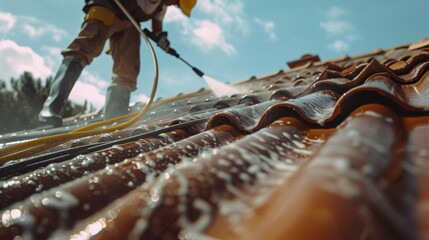
Regular Roof Cleaning will help keep your home healthy and looking great. It will eliminate slippery moss and algae, and keep pests away from your property. It also increases solar reflectance, lowering energy bills.
There are many ways to clean a roof, from power washing to manual removal. The right method depends on the type of roof and the severity of buildup.
Pressure washing
Over time, exterior surfaces like siding and roofs can accumulate dirt, mold, mildew, moss, and other contaminants. These contaminants can damage the surface of a building and decrease its lifespan. A professional cleaning service can use pressure washing to remove these contaminants and restore the appearance of a building. This method is environmentally friendly and can help prevent the buildup of harmful materials on your home or business.
There are a few different ways to clean the exterior of a property, including pressure washing and soft washing. While both techniques are effective, they differ in how much water is used and the amount of force applied. Pressure washing is the quickest and most effective way to clean exterior surfaces, but it can be damaging to delicate surfaces such as shingles or tiles. Soft washing is a safer and more gentle option that uses lower water pressure, but it may not be as effective at removing stubborn stains.
A thorough annual cleaning of the siding and woodwork on a house can significantly reduce the risk of permanent damage to the structure. This can also save homeowners money in the long run by preventing the need for expensive repairs or replacements. It can also improve the curb appeal of a home and make it look newer. If you suffer from allergies, cleaning the exterior of your house can reduce the amount of pollen and dust that enters the interior of your home.
Aside from improving the look of a home, a regular cleaning of the roof and gutters can prevent the development of moss, algae, and other fungi. This is especially important in areas with heavy rains. Moss, algae, and fungi can damage the shingles on a roof and lead to leaks and other problems. Regular roof cleaning can also prevent these issues and increase the lifespan of a roof. A professional cleaning company can use the right tools and equipment to effectively clean a roof and gutters. In addition to using high-pressure washing equipment, a professional can use biodegradable cleaners to ensure that the cleaning process is safe for the environment and the surrounding vegetation.
Chemical treatments
Chemical treatments are an effective and relatively safe method for cleaning moss, algae, and lichen. They also help extend the lifespan of roof materials, as they remove organic growths that can cause shingles and tiles to deteriorate. Many of these chemicals are effective even at low concentrations and are generally less abrasive than pressure washing. A combination of water and a cleaning agent is usually pumped onto the roof and allowed to sit for about 30 minutes before it is rinsed with clean, low-pressure water. This removes both the cleaning solution and loosened dirt and dead organic matter from the surface of the roof.
Sodium hypochlorite is the main ingredient in most commercially available roof cleaners. This powerful disinfectant kills algae, moss, and mildew on contact and prevents them from regrowing. It is typically used at a concentration of only about 3 to 6% in professional roof cleaning solutions and is often combined with other compounds, such as surfactants (substances that help cleaners stay on surfaces), to avoid damaging shingles and tile.
Hydrogen peroxide is another common roof-cleaning compound. This is a much less harsh cleaner than sodium hypochlorite and can be purchased at grocery stores in a diluted form. It is considered safe – or at least non-toxic – for plants, humans, and pets when used according to manufacturer directions. This is often the preferred roof-cleaning compound for homeowners who are concerned about environmental impact.
Chlorine bleach is a common roof cleaner that many contractors find effective and profitable. When bought at a grocery store, it is likely to be available in a 5.75% concentration. However, some contractors are able to obtain industrial chlorine at higher concentrations, which can be more effective than fresher household bleach but has the disadvantage of being slightly more hazardous to skin and eyes.
Other chemicals that are used for roof cleaning include biodegradable surfactants, which break down organic build-up without causing harm to the environment, and eco-friendly biocides such as DDAC and PHMB, which are safer than sodium hypochlorite for use around animals, plants, and children, but still highly effective at killing moss, algae, and fungus. These products can be applied by hand or with a scrub brush, but are typically more expensive than sodium hypochlorite.
Manual scrubbing
A clean roof enhances your home’s curb appeal, increases its value and extends its lifespan. In addition, it protects the rest of your home’s structures and prevents deterioration due to environmental elements. Most residential roofs need cleaning once a year, especially those in humid climates with heavy tree cover. A well-maintained roof lasts decades longer than one that is neglected. In addition, a clean roof prevents water leaks and prevents the accumulation of mold, algae, and moss.
There are several methods of roof cleaning, including power washing, chemical treatments, and manual scrubbing. Each technique has its pros and cons. Power washing is effective for removing dirt and grime, but it can damage certain types of roofing materials if not done properly. Chemical treatments are also effective but may require additional products to remove stains or biological growth. Manual scrubbing is an alternative to chemical cleaning and can be very effective for removing stubborn stains or moss growth.
Before starting the cleaning process, it is important to clear away any loose debris with a broom or rake. This will provide better traction for walking on the roof and help prevent dislodging or damaging shingles. It is also important to wear a safety harness and work with a partner.
A professional roof cleaning company can safely and effectively remove a variety of contaminants from your roof, including mold, algae, moss, mildew, and other growth. They can also apply a safe biocide to inhibit future growth and keep your roof in excellent condition.
The most effective roof cleaning method is soft washing, which uses a low-pressure water spray and specialized solutions to clean the roof without damaging the structure or the surrounding vegetation. It is also an eco-friendly option for roofs with significant buildup and a deep cleaning.
Regardless of the cleaning method you choose, it is essential to integrate it into a regular preventative maintenance routine. Regular cleaning and inspections help to ensure the longevity of your roof and to identify problems before they cause serious damage. It is also important to follow the manufacturer’s instructions for the cleaning solution you use, as some can damage roof materials if used incorrectly.
Chlorine bleach
Bleach is a common household cleaning product that can effectively disinfect surfaces and sanitise fabrics. However, bleach can also be dangerous to work with when mixed with certain chemicals or cleaners. This is because it produces toxic gases that can irritate the eyes and lungs, and corrode metals. Therefore, it is important to read and follow the manufacturer’s instructions when working with this chemical. The best way to ensure safety when using chlorine bleach is to have a well-ventilated area.
Some roof-cleaning specialists use high-strength pool chlorine to clean algae, moss, and lichen from roofs. This technique is effective, but it can cause damage to the roof’s materials if the bleach concentration is too high. In addition, high-strength chlorine bleach can also irritate the skin and lungs.
This type of roof cleaning is also harmful to plants and wildlife. When the solution dries, it leaves a strong chemical odor and can burn or kill grass, trees, and shrubs. It can also leak into nearby waterways and pollute the environment. Bleach is also a danger to human and animal health, and it should be stored in a well-ventilated area.
Non-chlorine bleach is a safer alternative to chlorine bleach. It is available in a variety of forms, including liquid, tablets, and gel. It works by releasing hydrogen peroxide, which breaks down organic material and removes stains without the need for harsh chemicals or pressure washing. Non-chlorine bleach is also more environmentally friendly than chlorine bleach, and it is less corrosive to plants and animals.
Another option for roof cleaning is to use a non-chemical treatment. This method uses a mixture of ingredients to lighten stains and eliminate moss and algae. It is a good choice for homeowners who want to reduce the amount of chemicals in their home and are concerned about the environmental impact of power washing and bleach treatments.
Many roof manufacturers recommend using products like Roof-A-Cide(r), which are safe to use on all roofing materials and provide a thorough cleaning without damaging the substrate or the roof’s longevity. In contrast, high-strength chlorine bleaches can degrade roof materials and lead to premature deterioration and failure.
Visit our Professional Services Blogs
Courtney Roberts Home, All Portland, Edward Lower Accounting, Trade Link Media Communications, Airconditioning Xperts, Clear Remediation, Deck Garden Furniture, Best Heating And AC Repair Covington WA, Absolute Heating And AC Repair Glendale, Trendy Mobile Designs, Kendall Lakes Tree Care, Palmetto Bay Tree Care, Jersey City Family Law Firm